
Tile Installed Correctly From Substrate to Grout
Bathroom tile installation in Concord for floors, shower walls, tub surrounds, and other moisture-exposed surfaces
The substrate beneath bathroom tile determines whether the finished installation stays bonded and level or begins to crack and separate within a few years. Woodsmann Restoration LLC approaches bathroom tile installation in Concord by treating preparation as the first and most consequential phase of the project—floor flatness, backer material compatibility, and membrane integration are addressed before any tile is set, because those decisions cannot be corrected once the field work is complete. Joshua handles each installation with the same attention to the underlying structure as to the visible finish.
The installation process covers tile selection appropriate to the application, layout planning that accounts for fixture positions and room geometry, surface preparation to the correct standard for wet or dry environments, and grouting and finishing that complete the surface correctly. In shower walls and tub surrounds, the backer system and any required waterproofing membrane are installed before tile work begins, because grout alone does not prevent water from reaching the substrate behind it. Concord homes from the late 1980s and 1990s frequently have original builder-grade tile over basic greenboard, a combination that predictably fails when grout cracks or caulk joints separate—bringing those surfaces up to current standards requires removing both the tile and the inadequate backer before the new installation begins.
Request a consultation with Woodsmann Restoration to review your bathroom tile project, including the surfaces involved, the tile styles you are considering, and what substrate
preparation your existing installation will require.
What Proper Tile Installation Actually Requires
Correct tile installation in a bathroom involves more than spreading adhesive and setting tile—layout lines must be established from a true reference point, mortar coverage must be sufficient across the back of each tile to prevent hollow spots that crack under foot traffic or thermal movement, and large-format tiles require back-buttering in addition to troweled mortar on the substrate to achieve the coverage percentages that industry standards require. These are the steps that separate an installation that holds for a decade from one that begins to telegraph movement through cracked grout within a year or two.
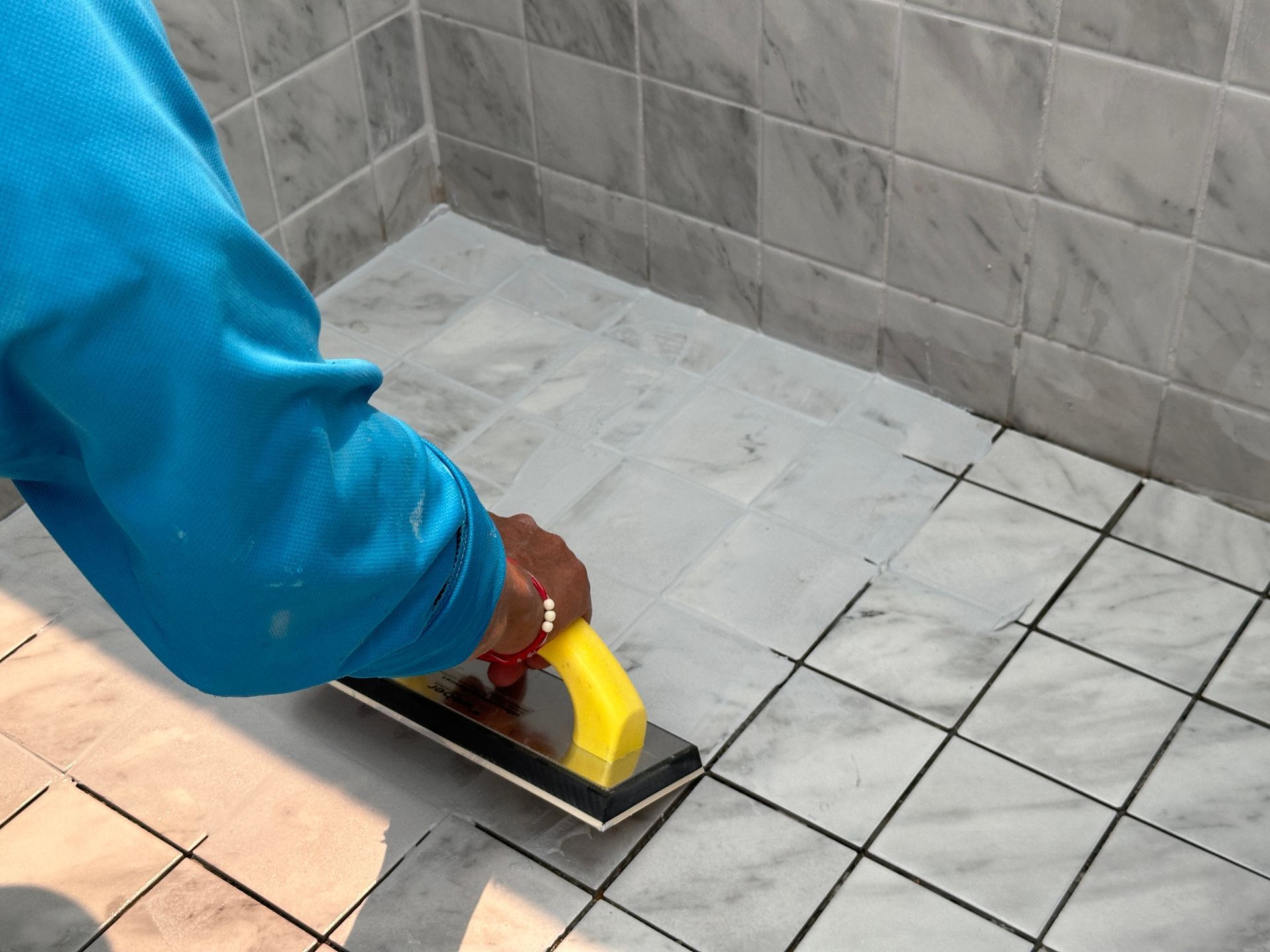
Once the installation is complete and grouted, the finished surface should be flat without visible lippage between adjacent tiles, grout joints should be consistent in width across the entire installation, and the surface should be fully cleaned of haze so the tile color and finish read as intended. Woodsmann Restoration documents completed projects with real installation photos so the standard of workmanship is visible rather than described in abstract terms.
Grout selection is a decision that affects maintenance as much as appearance—sanded versus unsanded grout is determined by joint width, and epoxy grout behaves differently from cement-based grout in terms of application window and stain resistance. These are tradeoffs worth understanding before tile is ordered, and Joshua walks through them as part of the planning conversation rather than making those decisions independently.
Common Questions About This Service
The questions below address specific decisions and standards involved in bathroom tile installation, including what affects longevity, how layout is planned, and what the finished work should look like.
What backer material is required for tile in a shower or tub surround?
Cement board, foam tile backer, or a comparable moisture-resistant substrate is required in wet areas because standard drywall—even the moisture-resistant variety—will swell and deteriorate when water reaches it through grout joints or caulk failures, which causes tile to separate from the wall regardless of how well it was adhered.
How is tile layout planned before installation begins?
A reference point—typically the center of the most visible wall or floor field—is established first, and layout lines are snapped from that point so the tile pattern is symmetrical relative to the room's most prominent features rather than simply started from a corner and run across the room, which almost always results in uneven cut tiles at the visible edges.
What determines whether a floor tile installation requires mortar or a different adhesive system?
Floor tiles in bathrooms are typically set in thinset mortar appropriate to the tile type and substrate—large-format porcelain, for instance, requires a medium-bed mortar with sufficient open time to allow back-buttering and adjustment, while smaller mosaic tiles on a mesh backing can typically be set with a standard modified thinset if the substrate is flat and properly prepared.
How does the age of a home in Concord affect bathroom tile installation scope?
Homes built before 1990 in this area were frequently tiled directly over greenboard or even standard drywall in shower applications, and those surfaces have often absorbed enough moisture over the years that they cannot serve as a stable substrate for new tile—complete removal down to the framing is typically the correct approach rather than tiling over the existing compromised base.
What maintenance does grouted tile require after installation to stay in good condition?
Cement-based grout in floor and wall applications should be sealed after the grout has fully cured, and caulk at movement joints—corners, floor-to-wall transitions, and anywhere tile meets a fixture—should be inspected annually and replaced when it cracks or separates, since those joints are designed to flex and grout is not the correct material to fill them.
Woodsmann Restoration LLC is ready to discuss your bathroom tile project in detail—call (704) 244-1726 to review the surfaces you want tiled, the materials you are considering, and what your specific installation will involve.