
Wall Repairs That Hold Up to Finishing
Drywall repair in Concord for holes, dents, and damaged wall surfaces that need to be ready for paint or finish work
A patched wall that shows through paint isn't a finishing problem—it's a preparation problem. The repair compound either wasn't feathered wide enough, the surface wasn't primed before painting, or the texture wasn't matched well enough to disappear at normal viewing distance. Woodsmann Restoration LLC performs drywall repair in Concord for homeowners dealing with holes from hardware or fixtures, surface dents, and wall damage accumulated during remodeling when careful integration with existing finish work matters most. The goal is a repaired surface that reads the same as the surrounding wall once paint goes over it.
The assessment before patching determines the repair method. A small nail hole needs a light skim of setting compound and a sand; a fist-sized hole through the face paper and gypsum core needs a backing clip or a California patch that supports the new compound without flexing. Larger damaged sections are cut to a stud or a backing board so the patch has a firm edge to fasten to. Each of these approaches has a different number of compound coats and drying intervals before the surface is stable enough to sand without pulling the repair back up. Skipping cure time between coats is the most common shortcut, and it shows as a sunken or wavy surface after the room is painted.
Schedule an assessment with Woodsmann Restoration LLC to look at the damaged area and determine what the repair requires before any finish work begins.
The Difference Between a Patch and a Finished Repair
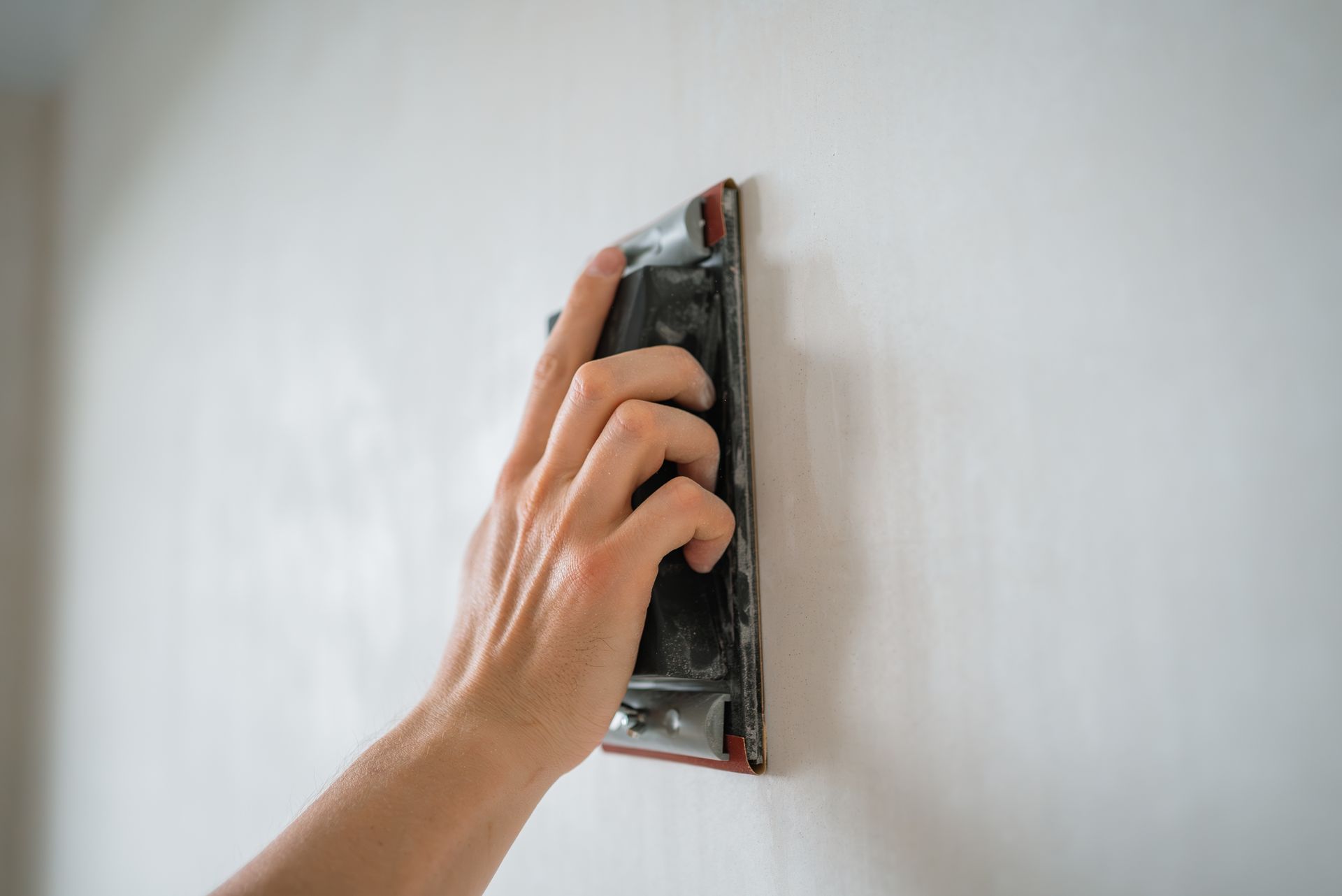
After the structural portion of a repair is complete—backing installed, drywall patch fastened, tape embedded—the finish coat sequence is what brings the patch flush with the surrounding wall. The first coat fills the fastener dimples and covers the tape; the second coat feathers the edges outward past the tape by several inches so the taper is gradual enough to become invisible. The third coat, applied thin and sanded carefully, levels the surface for primer. Each coat is applied only after the previous one has dried fully, which is visible when the compound shifts from dark to uniformly light across the whole repair area.
Once the repair is primed and ready, the wall surface at the patch will feel and look consistent with the drywall around it—no ridges at the tape edge, no visible fastener dimples, and no high spots that catch light differently than the surrounding wall. That outcome is the standard the repair is worked toward, not a bonus if conditions cooperate. In older Concord homes where walls carry a skip-trowel or orange-peel texture, the texture needs to be reapplied to the patch area before priming so the finished surface blends rather than showing a smooth island in a textured field.
Drywall repair handled by Woodsmann Restoration LLC covers holes, impact damage, surface imperfections, and minor wall damage within the scope of patch and finish work. It does not extend to remediation of water-damaged framing, mold removal, or structural wall alterations—those situations require specialists outside this scope, and the assessment will say so clearly if the damage points in that direction.
Questions Before Starting Your Project
The following questions address how drywall repair decisions are made based on the type and size of damage, and what the finished result should look like before the wall is painted.
How is the repair method determined by the size of the damaged area?
Small holes up to about two inches can be backed with a clip or a self-adhesive patch and skimmed; larger holes require a cut-out patch fastened to backing or existing studs so the repair has a rigid substrate that won't flex and crack the finish compound.
Why does drywall repair require multiple coats of compound instead of one application?
Setting compound shrinks as it dries, so a single heavy coat will crack and sink as moisture leaves it; multiple thin coats allow each layer to cure and stabilize before the next is applied, producing a flat, durable surface.
What is the purpose of priming a repaired area before painting?
Fresh compound is highly porous and absorbs paint unevenly, causing the repaired spot to flash—appear as a dull patch in the sheen of the surrounding painted wall; a coat of drywall primer seals the surface so the finish paint lays uniformly.
How is wall texture matched at a repaired area?
The texture pattern—whether orange peel, skip trowel, or knockdown—is applied to the patch before priming using the same technique used on the original wall; matching the scale and distribution of the texture prevents the repair from being visible after painting.
What should a completed drywall repair look like before paint is applied?
The surface should be flat within the surrounding wall plane with no visible tape edges, fastener dimples, or compound ridges; running a straight light source at a low angle across the wall is the standard way to identify any remaining high or low spots before finishing.
Woodsmann Restoration LLC also performs drywall repair in Harrisburg, Kannapolis, and other Cabarrus County communities in the service area. When you're ready to have the damaged area looked at, contact Woodsmann Restoration LLC to set up an assessment and talk through what the repair involves before any work begins.